
A Taopunk Metroidvania Built Around the Discipline of the Parry
Nine Sols arrives on Nintendo Switch with a very clear identity: this is not a gentle exploration-first Metroidvania that happens to include combat, but a combat-centered action-platformer where exploration, progression, atmosphere, and boss design all orbit around one essential question: can the player remain calm long enough to deflect correctly?
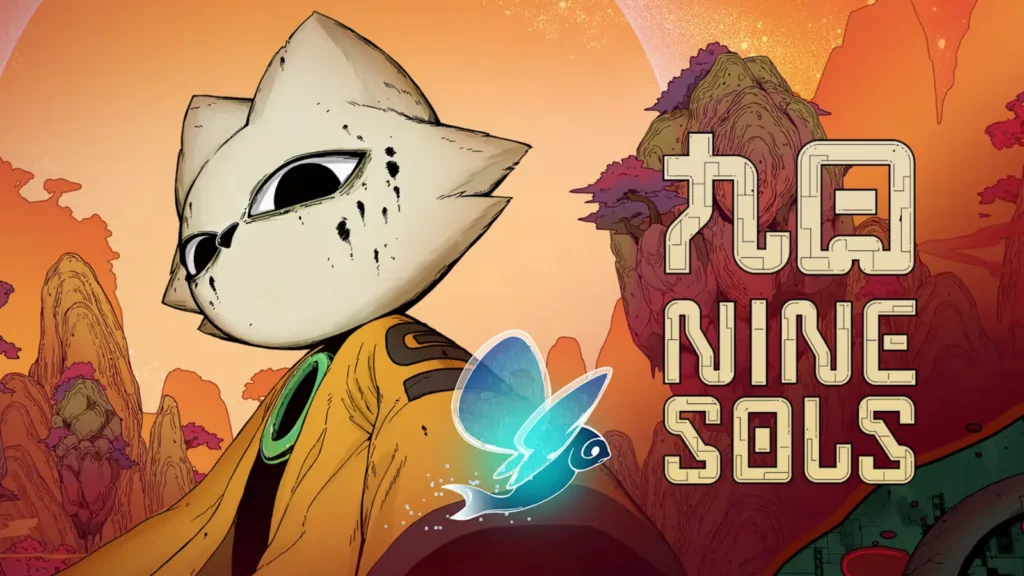
Developed and published by Red Candle Games, Nine Sols is a hand-drawn 2D action-platformer with Sekiro-inspired, deflection-based combat, set in the Taopunk world of New Kunlun, a fusion of Eastern mythology, Taoist imagery, cyberpunk aesthetics, and ancient alien civilization. The premise follows Yi, a resurrected hero seeking revenge against the nine Sols, the powerful rulers of a forsaken realm.
That description is useful, but it does not fully explain why Nine Sols has become such an important title for Metroidvania players. The game is not merely “Hollow Knight plus Sekiro.” It is more authored than that, more narratively direct, and more mechanically strict. Its best moments come when the player stops treating it like a traditional slash-and-dodge platformer and starts reading enemy patterns as a rhythm of pressure, punishment, and release.
Nine Sols belongs in the upper tier of modern 2D action games on Nintendo Switch because it understands what kind of discipline it demands from the player. It is not the most accessible Metroidvania on the platform, but it is one of the most mechanically confident.
Technical Sheet
Visual Presentation
Nine Sols has one of the strongest visual identities in the modern Metroidvania space. Its hand-drawn art is not simply decorative; it gives the world a mythological weight that helps distinguish it from the crowded field of dark 2D action games. New Kunlun is a place where ritual, technology, decay, and spiritual symbolism coexist without feeling like separate art directions pasted together.
The term “Taopunk” could easily sound like branding, but in practice it gives the game a persuasive visual vocabulary. Sterile machinery sits beside religious iconography. Ancient rulers feel both divine and artificial. The environments can move from industrial corridors to sacred spaces without breaking the tone because the game constantly frames technology as something almost theological.
Character animation is especially important because combat depends on reading intention. Enemy attacks need to communicate timing, danger, and recovery clearly, and Nine Sols mostly succeeds. Weapon glints, impact effects, enemy windups, and Yi’s defensive animations help the player understand what is happening even when the screen becomes tense.
On Nintendo Switch, the art style works well because the visual design is based more on shape language, animation clarity, and contrast than on raw rendering complexity. In handheld mode, the smaller screen reinforces the illustrated quality of the game. The caveat is that some busier scenes and UI details can feel dense during longer sessions, particularly when the player is already under mechanical pressure from demanding enemy patterns.
Combat
Nine Sols has one of the strongest visual identities in the modern Metroidvania space. Its hand-drawn art is not simply decorative; it gives the world a mythological weight that helps distinguish it from the crowded field of dark 2D action games. New Kunlun is a place where ritual, technology, decay, and spiritual symbolism coexist without feeling like separate art directions pasted together.
The term “Taopunk” could easily sound like branding, but in practice it gives the game a persuasive visual vocabulary. Sterile machinery sits beside religious iconography. Ancient rulers feel both divine and artificial. The environments can move from industrial corridors to sacred spaces without breaking the tone because the game constantly frames technology as something almost theological.
Character animation is especially important because combat depends on reading intention. Enemy attacks need to communicate timing, danger, and recovery clearly, and Nine Sols mostly succeeds. Weapon glints, impact effects, enemy windups, and Yi’s defensive animations help the player understand what is happening even when the screen becomes tense.
On Nintendo Switch, the art style works well because the visual design is based more on shape language, animation clarity, and contrast than on raw rendering complexity. In handheld mode, the smaller screen reinforces the illustrated quality of the game. The caveat is that some busier scenes and UI details can feel dense during longer sessions, particularly when the player is already under mechanical pressure from demanding enemy patterns.
Exploration & World Design
Nine Sols is a real Metroidvania, but it is not the purest exploration-first example of the genre. Its world is interconnected, its progression opens new routes, and its regions encourage backtracking, but the emotional center of the game remains combat and narrative rather than cartographic mystery.
The map design has strong moments. New abilities create reasons to reconsider previous spaces, and the world benefits from its dense atmosphere. Secrets, upgrades, and NPC interactions give exploration enough value to keep the structure meaningful. However, compared with the genre’s best exploration-driven works, Nine Sols can feel more directed and less organic.
This is where the game becomes slightly divisive. Combat and progression are clearly the strongest parts of the design, while map navigation and world flow are less consistently exceptional. Some players may find themselves wandering without a strong sense of direction, especially after returning to the game after a break.
This does not ruin the experience, but it does affect the way Nine Sols should be understood. It is not as frictionless as some modern players may expect, and its backtracking can occasionally feel more functional than exciting.
Still, the world earns its place because it has identity. Even when navigation is imperfect, New Kunlun feels authored and memorable. Players who prioritize exploration above all else should approach it with the right expectation: Nine Sols is not the genre’s most elegant map, but it is one of its most compelling combat journeys.
Movement & Controls
Movement in Nine Sols is precise rather than floaty. Yi does not move with the acrobatic looseness of some platform-heavy Metroidvanias. The controls are designed around commitment, spacing, and combat readiness. That makes sense because the game constantly asks the player to react with discipline.
Traversal abilities expand the player’s options over time, but they do not transform Nine Sols into a speed-focused movement playground. The game is more interested in combat positioning than expressive traversal. Jumps, dashes, counters, and enemy interactions all need to feel dependable because a missed input during a boss fight can collapse an otherwise strong attempt.
On Switch, the control experience is generally well suited to handheld play, though the game’s difficulty makes controller quality matter. Joy-Con play is viable, but longer sessions benefit from a Pro Controller or a comfortable handheld grip. This is especially true for players who struggle with repeated parry attempts or boss runbacks.
The controls feel responsive enough for the game’s demands, but no reliable measured input-lag analysis for the Switch version was found. Therefore, it is better to say that the port feels functionally responsive based on available impressions rather than claim a measured technical value.
Difficulty & Progression
Nine Sols is difficult in a deliberate way. Its challenge comes from timing, pattern recognition, and emotional discipline. The game wants the player to learn bosses, not overpower them casually. That makes victories feel earned, but it also means the difficulty curve can become a wall for players who dislike repeated failure.
Progression helps, but it does not fully soften the experience. Skill upgrades, Jade effects, health improvements, and new combat options give Yi more flexibility. However, the player still has to execute. This is one of the reasons Nine Sols feels closer to a combat pilgrimage than a typical upgrade-driven Metroidvania.
The game is not inaccessible in the sense of being poorly balanced. It is more accurate to say that it is selective. It rewards players who enjoy being tested. It may frustrate players who come to Metroidvanias primarily for exploration, collection, and gradual empowerment.
The checkpoint structure is generally fair, but the emotional experience of repeated attempts will depend heavily on the player’s tolerance for mastery-based design. Bosses can feel like walls until the pattern clicks. When it does, the game becomes intensely satisfying.
Story & Atmosphere
Story is one of the areas where Nine Sols separates itself from many Metroidvanias. Instead of hiding most of its narrative in fragments, item descriptions, and environmental suggestion, it presents a more direct revenge narrative centered on Yi and the rulers of New Kunlun.
This directness gives the game emotional momentum. Yi is not just a silent avatar moving through ruins. His quest has anger, history, and consequence. The world has lore, but it also has dramatic scenes, character interactions, and explicit stakes.
The atmosphere is unusually strong because Red Candle Games understands horror, ritual, and unease. The studio’s background with Detention and Devotion can be felt here, not because Nine Sols is a traditional horror game, but because it understands discomfort. New Kunlun feels beautiful and wrong. The game’s use of body horror, sacrifice, authoritarian power, and spiritual corruption gives its science-fiction mythology a sharper edge.
For some players, the story may even become more memorable than the map. That is rare in this genre. Nine Sols uses narrative not as a reward after gameplay, but as a reason to keep moving through a harsh world.
Soundtrack & Audio Design
The soundtrack supports the game’s hybrid identity with unusual confidence. Nine Sols needs music that can carry mysticism, melancholy, combat intensity, and futuristic dread. Its best tracks understand that the world is not simply “Asian fantasy” or “cyberpunk,” but a fusion of ceremonial gravity and mechanical violence.
Audio feedback is equally important. The sound of deflection gives the combat system much of its physical pleasure. A successful parry needs to feel clean, sharp, and readable; Nine Sols delivers that with satisfying impact.
The sound design also reinforces danger. Enemy attacks have enough audio identity to support visual reading, and boss encounters benefit from sharp impact sounds that make each exchange feel dangerous. The game does not rely only on music to create tension; it uses the rhythm of combat itself as part of its audio language.
On Switch speakers, the soundtrack remains effective, though headphones are strongly recommended in handheld mode. The game’s atmosphere benefits from focused listening, and the combat audio cues can help reinforce timing during difficult encounters.
Nintendo Switch Performance Analysis
Handheld Mode
Nine Sols works naturally as a handheld Switch game because its 2D presentation, compact file size, and encounter-based rhythm suit portable play. Short sessions can be satisfying when exploring, upgrading, or practicing a specific route. Boss attempts, however, can become intense in handheld mode because the game demands concentration and repeated execution.
Visual clarity is generally strong. The hand-drawn art remains attractive on the Switch screen, and enemy animations are readable enough for the combat system to function. UI readability is acceptable, though some text and interface elements can feel dense depending on the player’s eyesight and the length of the session.
Stability impressions are mostly positive, but not flawless. Public Switch discussion and reviews point to occasional frame drops, longer loading, or slowdown in some transitions, rather than a fundamentally broken port.
Docked Mode
Docked mode gives the artwork more room to breathe. Character animation, backgrounds, and boss designs benefit from a larger display, especially during visually elaborate encounters. The game’s sharp illustrated style holds up well on TV, even without reliable public resolution measurements.
For demanding bosses, docked mode may be the better way to play. A Pro Controller, larger screen, and more stable posture make repeated parry-heavy attempts less physically cramped. The game remains fully playable in handheld mode, but docked play better supports longer combat sessions.
No reliable measured docked resolution data was found. Therefore, any claim about exact docked resolution would be speculative. From an editorial perspective, the image quality is strong enough for normal play, but technical buyers should know that precise pixel-count data is not widely documented.
Performance Metrics
Performance summary:
- FPS: No reliable measured FPS data found.
- Resolution: No reliable measured resolution data found.
- Frame pacing: No reliable measured frame-pacing analysis found.
- Stuttering: Some public impressions mention occasional frame drops or slowdown, but available reports do not suggest constant or game-breaking stutter.
- Loading times: Longer loading or elongated transitions when entering new areas have been reported in public Switch impressions.
- Crashes: Publicly available reports do not consistently identify major crashing issues.
- Input lag: No reliable measured input-lag data found.
- Bugs: No consistent technical analysis confirms major Switch-specific bugs.
- Visual compromises: No detailed technical breakdown confirming specific visual compromises was found.
Port Quality Assessment
The Nintendo Switch version of Nine Sols is a solid port.
It is not an “excellent” port in the strict technical sense because reliable measured FPS and resolution data are not widely available, and there are credible reports of longer loads or occasional slowdown. However, the available review consensus does not suggest a poor or problematic version. The core combat remains playable, the art direction survives the transition, and the game is a strong fit for handheld play as long as the player accepts minor technical rough edges.
The key point is simple: Nine Sols on Switch is a good way to experience the game, but players who are highly sensitive to performance fluctuations may prefer stronger hardware.
Genre Positioning
Recommended classification
Combat-focused Metroidvania / Soulslike-inspired 2D action-platformer
Nine Sols belongs in the Metroidvania conversation, but it should be positioned carefully. It has interconnected areas, ability-based progression, backtracking, secrets, and exploration. It also has a strong sense of place, a gradually expanding toolset, and meaningful rewards. Those elements make it more than a linear action-platformer.
However, its dominant identity is combat. More specifically, it is a parry-centered, boss-driven, Soulslike-inspired Metroidvania. Players who enter expecting the quiet exploratory loneliness of Super Metroid or the freeform map mastery of Hollow Knight may find Nine Sols more rigid. Players who want a 2D game that treats combat mastery as the main form of progression will likely find it exceptional.
Within the Nintendo Switch catalog, Nine Sols sits near games like Hollow Knight, Blasphemous, Ender Lilies, and Death’s Gambit: Afterlife, but its feel is distinct. Hollow Knight offers broader exploration and more fluid aerial combat. Blasphemous leans into penitential weight and religious grotesque imagery. Ender Lilies is more melancholic and build-oriented. Nine Sols is sharper, more timing-based, and more directly narrative.
Nine Sols should be included in lists about the best Metroidvania games on Nintendo Switch, best Soulslike Metroidvanias, best games like Hollow Knight, and best combat-focused Metroidvanias. It should not be framed as the best choice for beginners or players seeking a relaxed exploration experience.
Veredict
Nine Sols is one of the most distinctive Metroidvania-adjacent games on Nintendo Switch because it understands exactly what kind of player it wants to challenge. It is beautiful, strict, atmospheric, and often brilliant. Its parry-based combat gives the game a mechanical identity that many genre entries lack, and its Taopunk world gives the journey a sense of cultural and visual specificity that feels rare.
It is not perfect. The exploration is good rather than genre-defining. Some backtracking can feel under-guided. The difficulty may alienate players who prefer empowerment over mastery. The Switch port is solid, but not technically definitive.
Even with those caveats, Nine Sols earns its place among the strongest modern 2D action games available on Nintendo Switch. It is a demanding recommendation, but a confident one. For players willing to learn its rhythm, Nine Sols is not just another Metroidvania for the backlog. It is a test of patience, timing, and nerve.
Score: 9/10
Nine Sols is a severe, elegant, and memorable combat-focused Metroidvania that turns every successful parry into an act of understanding.
- Exceptional combat system.
- Strong visual identity.
- Memorable story and atmosphere.
- Strong fit for demanding players.
- Exploration and map guidance are not as strong as the combat.
- Switch version is good, but not technically definitive.