

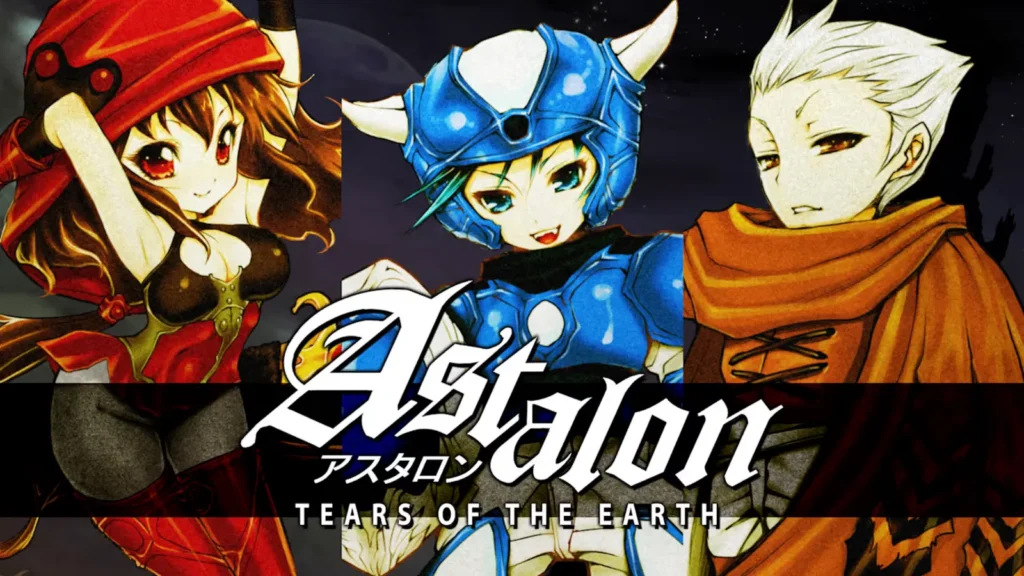
A Retro Tower Built Around Death, Memory, and Mastery
Astalon: Tears of the Earth is one of the most rewarding retro Metroidvanias available on Nintendo Switch. At first glance, it looks like a compact 8-bit action-platformer: small characters, simple attacks, tile-based rooms, straightforward enemies, and a deliberately old-school presentation. But the longer the adventure continues, the clearer its real strength becomes. Astalon is not impressive because it tries to look modern. It is impressive because its world is carefully constructed.
The game is built around the Tower of Serpents, a hostile vertical structure filled with locked doors, shortcuts, hidden rooms, character-gated routes, traps, bosses, and secrets. Progress is not only about gaining upgrades. It is about learning the tower itself. Every death, every shortcut, every suspicious wall, and every previously unreachable platform becomes part of a larger mental map.
Developed by LABS Works and published by DANGEN Entertainment, Astalon: Tears of the Earth was released on Nintendo Switch on June 3, 2021. Its premise is simple but effective: three heroes enter a mysterious tower to save their village, aided by a pact with the Titan of Death that allows repeated resurrection. That resurrection system is not just narrative decoration. It shapes the rhythm of the entire game.
This is a Metroidvania for players who enjoy structure over spectacle. It rewards patience, route planning, mechanical restraint, and curiosity. It may frustrate players who dislike backtracking or prefer modern movement fluidity, but for those who appreciate dense exploration and retro discipline, Astalon is exceptional.
Technical Sheet
Visual Presentation
Astalon: Tears of the Earth uses an intentionally old-school 8-bit visual style, but its presentation is more thoughtful than simple nostalgia. The pixel art is clean, readable, and mechanically useful. Rooms are compact, hazards are visible, enemies are easy to identify, and character silhouettes remain clear in both handheld and docked play.
The game’s visual identity is built around restraint. It does not try to overwhelm the player with excessive background detail or modern effects. Instead, it uses color, tile patterns, enemy placement, and environmental repetition to help the player understand the tower as a navigable structure. That matters because Astalon depends heavily on memory. A suspicious wall, a locked door, a vertical shaft, or an unreachable platform may become important much later.
The three main characters are visually distinct enough to support quick recognition. Arias, Kyuli, and Algus each occupy a different mechanical role, and the art supports that division without requiring complex animation. The enemies also follow a clear retro design philosophy: readable before flashy, functional before decorative.
On Nintendo Switch, this presentation works especially well in handheld mode. The screen size does not hurt the experience because the game’s rooms are visually direct and the UI is not overloaded. Docked mode gives the pixel art a larger presence, though the visual style remains deliberately simple. Players who need modern animation, elaborate lighting, or high-resolution art may find it plain. But within its chosen language, Astalon is visually confident.
The strongest compliment to its presentation is that it helps the design. The game looks the way it needs to look for the tower to be readable, memorable, and satisfying to master.
Combat
Combat in Astalon is direct, simple, and highly dependent on character choice. Arias attacks at close range, Kyuli uses ranged arrows, and Algus relies on magic. None of these characters has an especially complex moveset in isolation, but the combat becomes more interesting when the player understands that each room favors different tools.
A flying enemy near spikes may be easier to handle with Kyuli. A narrow corridor may favor Algus. A durable enemy blocking a straightforward path may be better approached with Arias. This structure gives the combat a light tactical layer without turning the game into a combo-driven action title.
Astalon is not trying to compete with Hollow Knight, Prince of Persia: The Lost Crown, or Nine Sols in terms of combat depth. Its fights are more old-school. Positioning, spacing, enemy patterns, health preservation, and character selection matter more than expressive technique. That makes combat readable and accessible, but not shallow.
The best combat moments happen when enemy placement and level design work together. A single enemy is rarely remarkable. But an enemy placed near a trap, above a ladder, inside a narrow passage, or before a difficult jump can create real tension. The game understands that in retro action-platformers, combat is often inseparable from room design.
Boss fights are solid, though not always the highlight. They test pattern recognition and patience, but Astalon’s most memorable challenges often come from exploration routes rather than isolated duels. The real enemy is the tower itself.
The main criticism is that character switching can sometimes create friction. When the player knows exactly which hero is needed but must travel back to switch characters, the combat and exploration loop can feel slower than necessary. This is part of the game’s old-school identity, but it will not appeal to everyone.
Exploration & World Design
Exploration is Astalon’s greatest strength. The Tower of Serpents is not just a sequence of rooms. It is a dense, interconnected structure that gradually becomes more understandable through death, shortcuts, upgrades, and memory.
The game does not rely on constant guidance. It expects the player to observe, remember, and return. Locked doors, suspicious walls, blocked passages, elevators, and inaccessible ledges become mental notes. Over time, these notes turn into routes. This is one of the purest pleasures of the Metroidvania genre: slowly converting confusion into mastery.
Character switching gives the world design a distinct identity. Arias, Kyuli, and Algus are not merely alternate combat options. They function as different keys to the same tower. Some paths require range. Others require magic. Others are better handled with direct melee strength. This turns exploration into a constant question: not only “Where can I go now?” but “Who do I need to become to solve this space?”
The death system reinforces this loop. When the player dies, progress is not erased in a meaningless way. Death becomes part of the upgrade economy and part of the learning process. You return stronger, but also smarter. You know which rooms are dangerous, which routes are efficient, and which shortcuts are worth pursuing.
This gives Astalon a light roguelite flavor without making it a roguelite. The tower is fixed and authored. The rooms do not randomize. The satisfaction comes from mastering a designed space, not from reacting to procedural variation.
Backtracking is significant. For many Metroidvania fans, this is part of the appeal. For others, it can become tiring, especially when character switching requires extra travel. Astalon is not afraid to be inconvenient in an old-school way. That inconvenience sometimes creates tension and satisfaction, but occasionally it creates repetition.
Even with that caveat, the tower design is excellent. It rewards patience more than speed, curiosity more than checklist completion, and memory more than automatic map-following.
Movement & Controls
Astalon’s movement is intentionally restrained. This is not a modern mobility-focused Metroidvania built around air dashes, wall movement, advanced traversal chains, or high-speed platforming. It feels closer to classic action-platformers, where every jump has commitment and every room must be respected.
That restraint is important to the game’s identity. The characters are not designed to feel powerful in every situation. They are designed to feel limited in different ways. The player’s power comes from understanding those limitations and choosing the right character for the right challenge.
Jumping is precise but old-school. Attacks are simple. Movement is readable. There is not much mechanical excess. For players who enjoy the clean discipline of retro platformers, this feels satisfying. For players who prefer smoother modern movement, it may feel stiff at first.
On Nintendo Switch, the control layout works well. The game does not require complex button combinations or constant rapid inputs, which makes it comfortable in handheld mode. Short sessions also feel natural because the structure is room-based. You can make progress, unlock a shortcut, die, upgrade, and stop without feeling that the game demands a long uninterrupted session.
The main issue is not the control scheme itself, but the old-school commitment behind it. Astalon expects the player to adapt to its pace. Once that rhythm clicks, the movement feels deliberate rather than limited. Until then, it can feel rigid compared with more fluid genre entries.
Difficulty & Progression
Astalon is challenging, but its difficulty is not built mainly around extreme reflexes. It is built around attrition, routing, resource preservation, and knowledge. The tower wears the player down. A careless mistake in one room may make the next room more dangerous. A bad route may cost health. A missed shortcut may turn a return trip into a risk.
Death is central to progression. The game uses resurrection as both a story concept and a mechanical loop. Dying allows the player to spend resources, improve characters, and prepare for another attempt. This makes failure less punishing than it initially appears, but it does not remove tension. Progress still feels earned.
The progression system is satisfying because it respects both permanent upgrades and player learning. You become stronger statistically, but you also become better at navigating the tower. The map becomes less intimidating because your understanding improves.
The difficulty curve can feel front-loaded. Early hours may be harder because the player has fewer upgrades, fewer shortcuts, and less knowledge of the tower. Later, as routes open and upgrades accumulate, the game becomes more manageable. This creates a rewarding sense of growth, though it may discourage players who bounce off the first stretch.
Astalon’s progression is not generous in the modern convenience sense. It does not constantly remove friction. It asks the player to accept repetition, learn from it, and gradually dominate the space. That makes it highly satisfying for genre fans, but less ideal for players who want frictionless exploration.
Story & Atmosphere
Astalon’s story is simple, but it gives the adventure enough context to matter. Three heroes enter a mysterious tower to save their village in a dying world. A pact with the Titan of Death allows them to resurrect, turning death into a tool for survival. This premise fits the game’s mechanics unusually well.
The atmosphere is stronger than the plot itself. The tower feels dangerous, ancient, and oppressive. The world outside is damaged, and the characters’ mission has a quiet desperation. Astalon does not need long cutscenes to establish its tone. The repeated climb, the hostile rooms, and the constant return from death do much of the narrative work.
The party structure also helps. Having three protagonists gives the adventure a different emotional texture from the usual lone-hero Metroidvania. Arias, Kyuli, and Algus feel like a small expedition team, each contributing something essential. Their mechanical differences support the fiction: survival depends on cooperation, even though the player controls only one character at a time.
The story will not be the main reason most players remember Astalon. It is not a dialogue-heavy or cinematic Metroidvania. But it is effective because it understands its role. It gives the tower meaning, reinforces the resurrection loop, and supports the dark fantasy mood without slowing the game down.
Soundtrack & Audio Design
The soundtrack matches Astalon’s retro identity. It uses a chiptune-style sound that supports the 8-bit presentation while still giving the tower enough energy and atmosphere. The music is not merely decorative; it helps establish the rhythm of exploration.
The best tracks give the game a sense of danger and forward motion. They make the tower feel like a place of challenge rather than a static maze. The soundtrack does not reach the emotional scale of Ori or the gothic richness of Castlevania, but it fits Astalon’s design perfectly.
Sound effects are clean and functional. Attacks, damage, pickups, enemy reactions, and environmental cues are easy to understand. This clarity matters because Astalon’s rooms often combine platforming, enemies, and hazards. The player needs information quickly, and the audio supports that.
In handheld mode, the audio remains clear through the Switch speakers. With headphones, the soundtrack’s retro texture becomes more enjoyable, especially during longer exploration sessions. Like the visual presentation, the audio succeeds because it is consistent, readable, and aligned with the game’s old-school structure.
Nintendo Switch Performance Analysis
Handheld Mode
Astalon is naturally well suited to handheld play. Its room-based structure, readable pixel art, simple UI, and short-session progression loop make it comfortable on the Nintendo Switch screen. The player can explore a few rooms, unlock a shortcut, die, upgrade, and return without needing a long play session.
Visual clarity is strong in handheld mode. Characters are small but readable, hazards are clear, and the interface does not overwhelm the screen. The retro art style helps the game avoid many of the visibility issues that affect more visually dense titles on portable hardware.
Publicly available reports do not consistently identify major handheld-specific crashing problems. However, no reliable measured handheld FPS or resolution data was found. There are isolated user reports describing the Switch version as choppy or less responsive than expected, but these reports are not consistent enough to establish a universally confirmed technical issue.
From a practical perspective, handheld mode is one of the best ways to play Astalon on Switch. The game’s structure fits portable play extremely well, even if players sensitive to frame consistency may want to compare with other platforms when possible.
Docked Mode
Docked mode presents Astalon cleanly on a television. The pixel art scales well enough because the game is visually simple and mechanically readable. Larger screen play can make room layouts easier to study, especially when planning routes or identifying suspicious environmental details.
No reliable measured docked resolution data was found. Publicly available professional reviews generally focus more on the game’s structure, difficulty, backtracking, and character design than on severe Switch-specific technical flaws. That suggests the port is broadly serviceable, though not documented with detailed technical metrics.
Docked mode is a good option for players who prefer a larger display, but the game’s biggest strength remains its compatibility with portable play. Astalon does not need a television to communicate its best qualities.
Performance Metrics
Performance summary:
- FPS: No reliable measured FPS data found.
- Resolution: No reliable measured resolution data found.
- Frame pacing: No consistent technical analysis confirms major frame pacing problems, though isolated user reports mention choppiness.
- Stuttering: No consistent technical analysis confirms widespread stuttering issues.
- Loading times: Publicly available reviews do not consistently identify loading times as a major issue.
- Crashes: Publicly available reports do not consistently identify major crashing issues.
- Input lag: No reliable measured input lag data found; isolated user impressions mention possible sluggishness compared with PC.
- Bugs: No consistent technical analysis identifies major Switch-specific bugs.
- Visual compromises: No major Switch-specific visual compromises were consistently reported.
Port Quality Assessment
Astalon: Tears of the Earth is best classified as a solid Nintendo Switch port.
The game fits the hardware well because of its retro presentation, compact rooms, readable UI, and portable-friendly structure. There is no strong public consensus pointing to major crashing, severe bugs, or unplayable performance problems. However, the absence of reliable measured FPS and resolution data, combined with some isolated user complaints about choppiness or sluggishness, prevents a stronger technical classification.
For most players, the Switch version should be a good way to experience Astalon, especially in handheld mode. For players highly sensitive to input feel or frame consistency, the PC version may be worth considering as a comparison point. But judged as a Nintendo Switch Metroidvania, Astalon remains easy to recommend.
Genre Positioning
Astalon: Tears of the Earth is best understood as a retro Metroidvania with exploration-heavy design, character-switching progression, and light roguelite-inspired death mechanics.
It is not an Igavania in the style of Symphony of the Night or Bloodstained: Ritual of the Night. It does not focus on loot variety, equipment systems, RPG builds, or a large spell and weapon catalog. It is also not a full soulslike Metroidvania, even though death and difficulty are important. The death loop supports upgrades and repeated attempts, but the game does not revolve around stamina combat, corpse retrieval, or Souls-style encounter design.
Its closest identity is a classic action-platformer expanded into a dense Metroidvania structure. It shares the old-school discipline of NES-era design, but its interconnected tower, ability gating, shortcuts, secrets, and backtracking place it firmly within the Metroidvania conversation.
Recommended classification:
Retro Metroidvania / Exploration-Heavy Metroidvania / Character-Switching Action-Platformer
Astalon is especially recommended for players who value map design, secrets, and long-term mastery over immediate fluidity. It is less ideal for players who want fast movement, constant convenience, or modern combat complexity. Its appeal is specific, but within that specific lane, it is one of the strongest games of its type on Nintendo Switch.
Veredict
Astalon: Tears of the Earth is a superb retro Metroidvania because it understands that exploration is not only about the size of the map. It is about how the player learns space, remembers obstacles, opens routes, manages risk, and slowly turns a hostile environment into familiar territory.
Its combat is simple but purposeful. Its movement is restrained but precise. Its tower design is dense and rewarding. Its death system gives failure meaning without turning the game into a procedural roguelite. Most importantly, Astalon respects the intelligence and patience of the player.
The game does have friction. Backtracking can feel heavy. Character switching is sometimes less convenient than it could be. The old-school movement will not satisfy everyone. The Switch version also lacks widely available measured performance data, and isolated user reports suggest some players may notice choppiness or sluggishness.
Even so, Astalon remains one of the most compelling retro Metroidvanias on Nintendo Switch. It is not the flashiest game in the genre, but it is one of the most carefully built.
Score 9/10
Astalon: Tears of the Earth is a dense, demanding, and deeply rewarding retro Metroidvania that turns every death into another step toward mastering its tower.